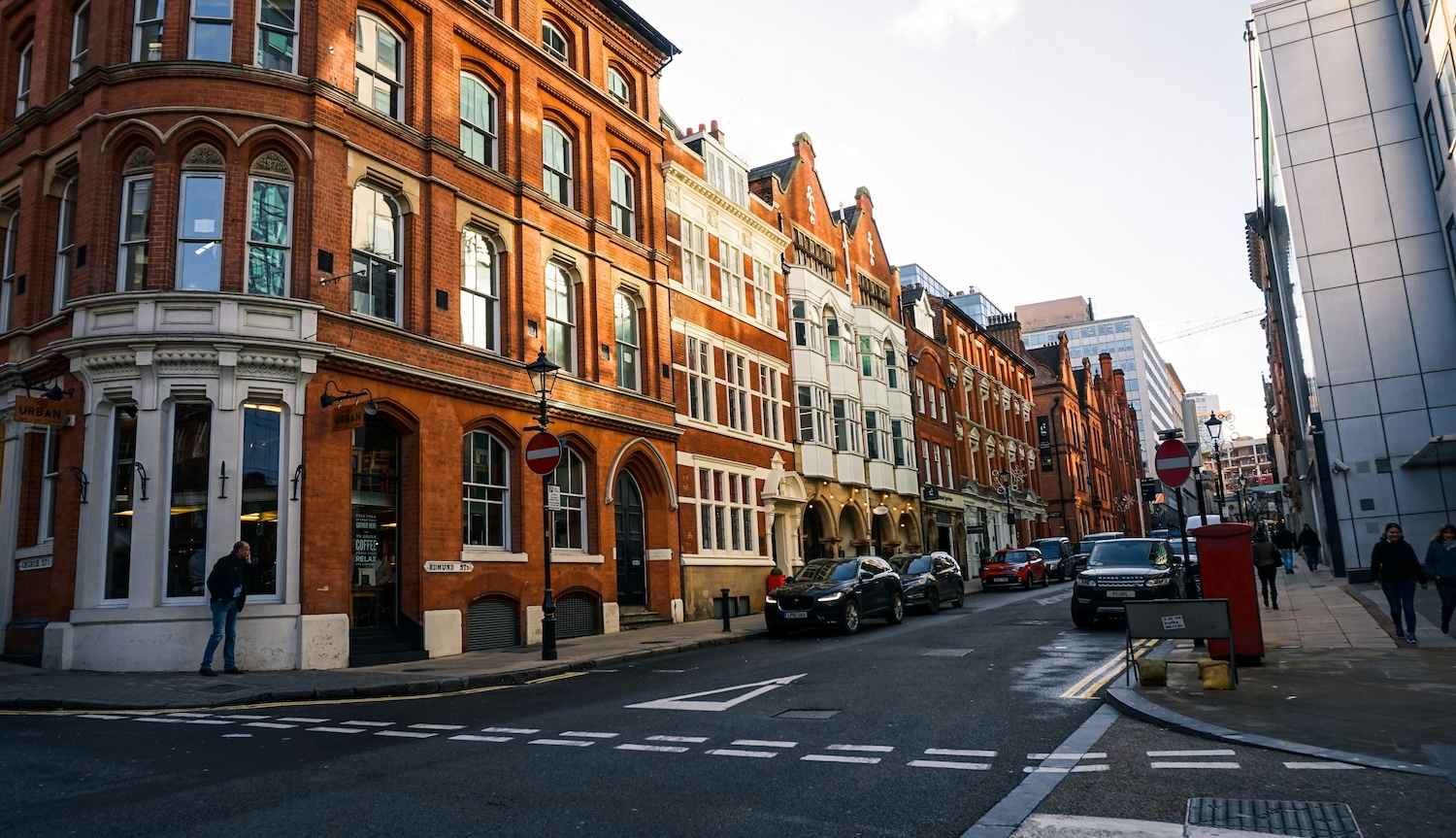
Birmingham is a city constantly in flux, evolving with each passing year as new developments take shape. The phrase ‘It’ll be nice when it’s finished’ remains a running joke, reflecting ongoing construction and transformation. Looking ahead to 2050, several proposals currently under review promise to redefine the city’s appearance and infrastructure.
One notable project involves expanding Birmingham’s rail network. Plans include adding two new railway sections, or “chords,” to connect the Camp Hill line with the Chiltern main line. This development aims to reduce congestion and increase the frequency of trains arriving and departing. As part of this, the previously unused platform five at Birmingham Moor Street station is scheduled for activation, with some services from New Street expected to transfer to ease crowding. The plan anticipates three additional trains per hour to destinations southwest of Birmingham, six Cross City trains per hour, plus extra services to the East Midlands and North East. To accommodate these changes, the arches of Bordesley Viaduct-currently home to several independent businesses-will be widened, leading to the unfortunate displacement of many of these enterprises by 2030. Construction is set to begin in 2030, with the new railway line expected to open in the early 2030s. A further public consultation is planned for summer 2027.
In the city centre, the area spanning from HS2 Curzon Street Station to Cathedral Square (also known as Pigeon Park) is earmarked for substantial transformation under the Birmingham Central Heart vision. This ambitious proposal seeks to deliver at least 5,000 new homes along with more than 400,000 square metres of commercial space. The redesign involves changes to several key locations, including Curzon Street, Cherry Street, Cathedral Square, Martineau Place, High Street, and more. A new road will be constructed, providing a direct route from Pigeon Park to Curzon Street Station. If progress aligns with the current schedule, residents and visitors will, by 2050, enjoy numerous new shops, cafés, offices, and public green spaces.
READ MORE: Lozells and East Handsworth named most dangerous area in Birmingham
READ MORE: Birmingham council plans to reduce most speed limits to 20mph
Regarding HS2, high-speed rail services are expected to be fully operational between May 2040 and December 2043, linking London Euston with Birmingham’s Curzon Street and beyond. Initial services from Old Oak Common in west London to Birmingham should commence between May 2036 and October 2039. The project has faced complex challenges, including the safeguarding and reinterment of over 4,000 bodies discovered during construction.
The Paradise redevelopment is anticipated to be completed by 2030, concluding years of construction near the old library area. This redevelopment will see the removal of the longstanding Copthorne Hotel, making way for 1.3 million square feet of office space, eight new buildings, three public squares, 330 car parking spaces, 370 build-to-rent homes, 120,000 square feet dedicated to retail and leisure, and a boutique hotel with 198 rooms.
Finally, the Smithfield development is progressing swiftly, with most buildings expected to be finished by 2035. This new district will feature the relocated Bullring Markets, ready by 2030, and the city’s largest new green space covering nearly two acres. Manor Square will serve as a fresh public meeting place, complemented by residential towers reaching 31 and 16 storeys and offering 408 new apartments.
As these projects advance through planning and consultation stages, the future of Birmingham promises a city reshaped by modern infrastructure, increased housing, and enhanced public spaces, defining its character well into the middle of the century.