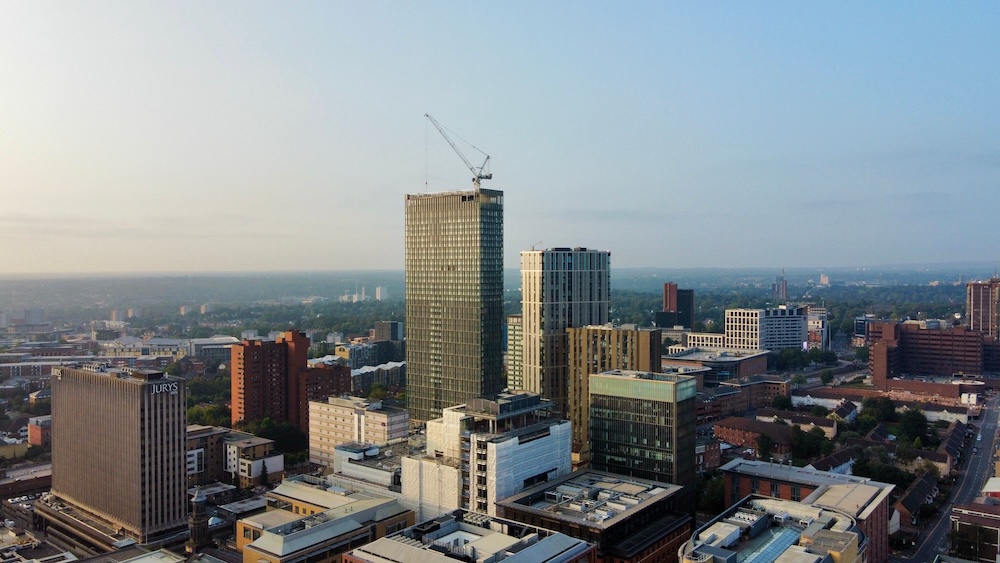
Birmingham’s planning committee has declined permission for a 16-storey student accommodation building on the former site of the Golden Eagle pub, a once-iconic city centre music venue.
The proposed development aimed to provide 263 student bed spaces at the corner of Swallow Street and Hill Street, where the Golden Eagle pub operated until its closure in 1984 and subsequent demolition.
Developers emphasized that their design would honor the site’s historic and emerging architectural context. A council officer’s report supported the scheme, highlighting potential economic, environmental, and social benefits, including efficient use of brownfield land.
READ MORE: Frank admission on HMOs in Birmingham as planner says ‘we need them’
READ MORE: Universal Credit Rules to Ease for Over 560,000 People Starting Wednesday
However, the report also acknowledged that the project would cause low-level but “less than substantial” harm to nearby heritage assets like Birmingham Town Hall and the Former General Post Office, both of considerable historic significance. Despite this, the officer recommended approval, stating that the benefits outweighed the heritage impact.
At the planning meeting, councillors expressed doubts, especially over the building’s height and its impact on the sensitive heritage surroundings. Coun Philip Davis described himself as “torn,” recognizing the project’s merits but concerned about its effects on the area. Coun Gareth Moore questioned the need for additional student accommodation, noting the city’s existing supply and emphasizing the harm to heritage.
Planning committee chair Coun Lee Marsham acknowledged the developers’ efforts and highlighted a clear demand for purpose-built student housing confirmed by a council officer. It was noted that earlier proposals had envisioned a 45-storey tower, scaled down to address viability and heritage concerns.
Ultimately, the committee voted to refuse the application, with an indication that the scheme could be reconsidered after addressing the issues raised regarding height and heritage impact.
The original report had suggested the development might contribute positively to the regeneration of this part of Birmingham’s city centre. The proposal also included shared internal amenity spaces and commercial use on the ground floor.